This Sunday we’re back in book of John. We’ll look at John 10:1-10 at Jesus’ statement “I am the door.” Read over the passage if you can, and spend some time in prayer to prepare your hearts for worship. Christ is all! See you Sunday!

This Sunday we’re back in book of John. We’ll look at John 10:1-10 at Jesus’ statement “I am the door.” Read over the passage if you can, and spend some time in prayer to prepare your hearts for worship. Christ is all! See you Sunday!

It’s been said that if everything is the mission, then nothing is. There are things that the church can do, but those things should not be confused with the what the church must do. The church’s mission is to make disciples of Jesus Christ. Most would agree on that. But while we agree that’s what we must do, we still have to be careful that we stay ON MISSION, that we not get distracted away from our central calling of disciple-making.
Jared Wilson offers 10 common hazards we can fall into that can get a church off of our mission in this helpful post:
10…common ways churches engage in “mission drift.”
1. They over-program.
In this way, we mistake activity for mission and busy-ness for fruitfulness. And while Christians fellowshiping and “doing life” with each other is important, some churches fill the calendar with so many programs and meetings, etc. that their people have little to no margin to be on mission.
2. They pour all their energy into the weekend service.
For many churches, the extent of their weekly thinking, planning, strategy, creativity, etc. is channeled into the production of the weekend gathering. They justify this inward focus by trying to design this service as evangelistically and seeker-minded as possible, but it effectively turns the “go and tell” of mission into the “come and see” of attraction.
3. They use too much insider lingo.
The church service in particular is biblically for the Christian, but the New Testament still tells us it ought to be intelligible to “outsiders.” Some churches communicate only “inside baseball” in their services and groups so that it becomes difficult for interested unbelievers to follow and seek to understand.
4. They are just plain unwelcoming.
We all know about churches that don’t acknowledge visitors. There are also community groups that don’t have an open door for curious unbelievers and other visitors. There are people who look down their noses if someone is in their parking space or pew. Some church communities just aren’t interested in growing or reaching out.
5. They are preoccupied with politics.
Their pastors are too busy culture-warring to be soul-winning and their people are too busy arguing about who should be President to consider how their anger and worry might (or might not) adorn the gospel.
6. They are still stuck in the past, culturally speaking.
Some churches look frozen in time. While there are lots of rich things from our history and tradition worth holding onto, having a church that looks like it stepped out of a time machine in the 1970s probably isn’t it. Some churches are so committed to preserving how they’ve always been, they cannot adequately contextualize the gospel for their communities today.
7. They’re trying to re-create the past.
Some churches have moved on from the past, but are desperate to get it back. But a church can kill its future by constantly trying to recapture “the good ol’ days,” mainly because this is an inward focus and also because outsiders, visitors, and the lost don’t care one bit about your church’s “good ol’ days.”
8. They are preoccupied with social justice causes but not doctrine.
Meeting people’s felt needs and addressing systemic, cultural ills can be biblical and valid implications of the gospel, but a lot of churches forget the gospel part. They trade in the primary purpose of the gospel for its implications. This is a particularly deceptive mode to be in, because socially-conscious churches look like they’re on mission. But if the gospel is not at the center of what we say and do, it’s not God’s mission that we’re on.
9. They are doctrinally rigorous but socially withdrawn.
The opposite of the above problem. These churches are hearers of the word only. Sometimes they are so suspicious of “social justice” and the “social gospel” that they’d rather die than be caught making a concerted effort to care for the poor, the widow, and the orphan.
10. They are divided or otherwise riddled with conflict and power plays.
Some churches are fertile ground for power-hungry folks or divisive personalities jockeying for position. In many of these churches, the leaders may be interested in kingdom mission but find that so much of their energy is occupied in mediating arguments, managing contentious member meetings, defending themselves, or just trying to keep the peace. In these cases, people have forgotten what a church is even for.
…the angel said…“Do not be afraid, for I know that you seek Jesus who was crucified. He is not here, for he has risen, as he said. Come, see the place where he lay…he has risen from the dead…” (Matthew 28:6-7)

Last Sunday I referenced some alarming research findings that came out in 2005 regarding the spiritual beliefs of American teens, which really reflect the beliefs of many Americans young and old. One term that emmerged from that research was Moralistic Therapeutic Deism. In short, the research showed that while Americans might say they are Christians, they’re beliefs about God, Man, Christ, and The Gospel were not in keeping with historic or biblical Christianity. Below is a link to a summary of the research as well as a quote:
“It is not so much that Christianity in the United States is being secularized. Rather more subtly, either Christianity is at least degenerating into a pathetic version of itself or, more significantly, Christianity is actively being colonized and displaced by a quite different religious faith.”
You’ll notice that Moralistic Therapeutic Deism is void of what the New Testament refers to as “of first importance” — The Gospel! Click the link below for a breakdown of the gospel, published in Christianity Today.
http://www.christianitytoday.com/edstetzer/2015/june/what-is-gospel.html

I love the accuracy and readability of the ESV Translation of the Bible. But regardless of which translation you read/study from, this is good/helpful info on Bible translations. Check it out! http://thevillagechurch.net/sermon/what-bible-translation-does-the-village-recommend/

Here are a few great quotes from a book that we have been going through together in our Tuesday morning men’s Bible study, Kingdom Man.
“A kingdom man is one who visibly demonstrates the comprehensive rule of God underneath the Lordship of Jesus Christ in every area of his life.” p.14
“To be aligned under God is to consistently make your decisions whether personal or professional, in line with God’s Word.” p. 34
“Achieving greatness means maximizing all that you are destined to be for the glory of God and for the good of others.” p. 44
“Men…if you will simply make the most of where you are, God will do the rest…Never let your limitations limit what God can do with you.” p. 50
“The problem in marriages today isn’t that we have too many women who don’t want to submit. The problem is that we have too many men who don’t want to submit–to the lordship of Jesus Christ.” p. 78
“If you are not willing to be a blessing to others through what God has given you, then why should He consider you as a good candidate for a blessing?” p. 105
“Kingdom success runs much deeper than the width of a wallet, the square footage of a home, or the smiles in a photograph hanging on a wall. Success has to do with fulfilling the reason for being for God’s glory, your good, and the benefit of others.” p. 116
It’s been a great study so far. We’ll pick back up again after spring break, Tuesday, 3/15.

Check out this month’s issue of Grace Bible Fellowship’s Grace Notes at the link below:

Me and 30 of my closest friends at the Mavs game this past Wednesday night!! 25 4th, 5th, & 6th grade boys + 5 great adult leaders (Jason Waligura, Donnie Walton, Jarod Martin, Brandon Jester, & Barret Dupler) & me. We had a great time.
Effective youth ministry has at least 3 components. You have to — 1. PLAY 2. PRAY & 3. PREACH. This night was heavy on the PLAY. Our hope and prayer is that through this fun outing we disarmed these boys toward Christ’s church and built some relationships toward deeper, life on life discipleship.
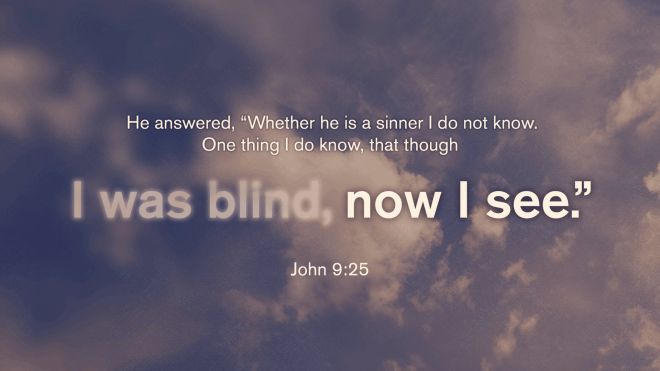
We’ll be looking at John 9 this Sunday at Grace Bible. And it’s not just a story about a nameless man born blind who regained his sight. It’s more than that. It’s the story of all of us apart from Jesus Christ. It’s my story. I was blind, now I see.
See you Sunday, Fam.
 Pastor Roy Layman